By Harry McLusky
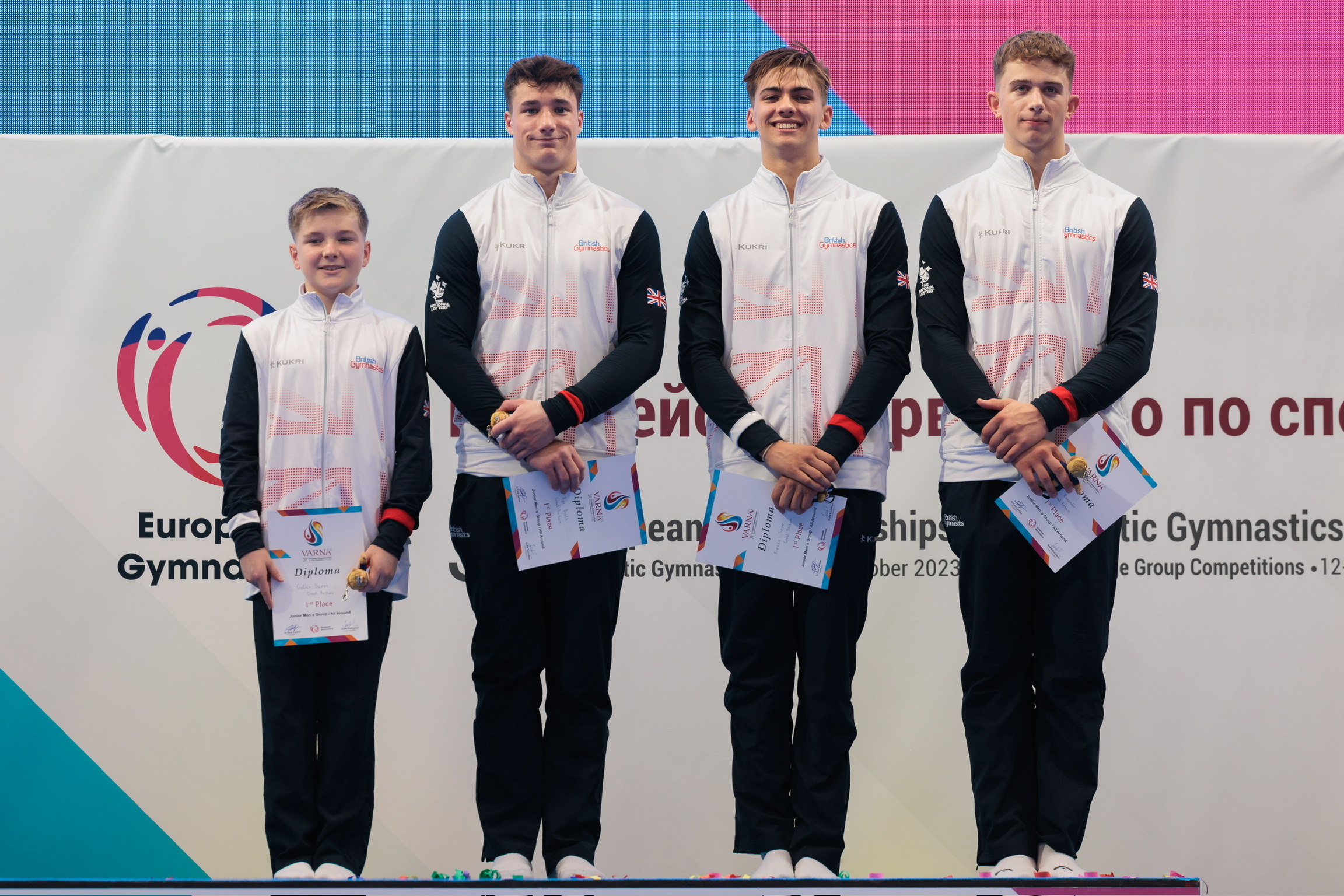
Upper Sixth student, Rex Booth, is no stranger to success. Ever since he tagged along to one of his sister’s training sessions, aged just eight years old, Booth’s acrobatic gymnastics career has been nothing short of elite, culminating in his recent performance at the 31st European Championship of Acrobatic Gymnastics in Varna, Bulgaria in October.
However, Booth’s journey started way before Varna. After it was suggested that he trial for a more intense club following his eye-catching participation in his sister’s training, Booth’s career started in the completely different discipline of tumbling. The physically-challenging somersaults, twists and flips of tumbling set the foundations for his gymnastics future, supporting the development of the necessary stamina, creativity and core strength that are vital for acrobatic gymnastics.
Booth described the transition to acrobatic gymnastics as relatively spontaneous, as an initial trial led to his call-up to Richmond Gymnastics Association’s acrobatic squad, and it just ‘went from there really.’
Driven by his ‘desire to win and be involved in a top-level sport,’ Booth’s first international challenge came in 2019, representing Great Britain at the European Championships in Holon, Israel. Coming into the tournament as the least experienced in his group, nerves were understandably high. Nonetheless, his 11-16 Men’s Four won silver, catalysing Booth’s passion for the sport, ‘opening his eyes to keep going.’
Rex’s role as one of the ‘middles’ in his performances requires both mental and physical strength. Not only does Booth have to precariously balance on the ‘base’, but he also has to simultaneously push and balance the ‘top’ with his hands. The functions of him and the three other boys in the team work in tandem to perform dazzling displays of choreography and athleticism.

Unsurprisingly, this colossal demand of both rehearsal and fitness requires huge sacrifices in Booth’s life. As well as balancing the often-arduous life of being an A-level student, along with being part of the school’s 2nd XI and also swimming outside of school at a high level too, Booth has to manage 20 hours of training per week, a number which only intensifies in the build-up to major competitions.
However, perhaps the underlying driving force of Rex’s ongoing success is his clear desire to win. He says that “since silver in 2019, I’ve always wanted to win golds at the highest levels,” demonstrating his perseverant mentality to overcome disappointment and convert it into victory.
This was manifested after slightly disappointing results in Italy in 2021 and Azerbaijan in 2022, although the long-term international experience gained from these competitions arguably outweighed the need to win in the short term. For Rex, “it’s about proving yourself and redeeming himself.”
And that was exactly what he did.
Months of training had prepared him for five three-minute performances over five days at the appropriately-named Palace of Sports and Culture in Varna, Bulgaria.
Booth and his team would be performing in three different disciplines of acrobatic gymnastics: an exciting, fast-paced ‘dynamic’ routine, involving daring flips and jumps; a ‘balance’ routine, where poise and strength are vital to create intricate pyramids and lifts; and the all-around discipline – a mix of the two.

There was tangible confidence in the Great Britain camp – training performances had been solid, and the team had a real chance of succeeding in Bulgaria. This confidence was immediately transferred over into the opening qualifying round in the balance category. Booth’s team of four topped their balance qualifying stage comfortably, setting up an exciting final early into their campaign.
Their balance final was choreographed to the iconic, upbeat ‘The Time Warp’ from The Rocky Horror Picture Show, Booth expertly executed the routine he had trained so many times in the months leading up to the European Championships. Despite the obvious pressure involved, the team performed their breath-taking series of pyramidal constructions to near perfection, receiving an excellent score of 27.500, despite a penalty of -0.30 points – enough to pip Portugal to the post and win the first gold medal of the week. An incredible start for Booth (his first ever gold on the European stage) and his team, setting the standard for their following performances, and forcing them to go above and beyond to continue his successful streak.

However, despite their positive start, the qualification for the dynamic final was not so smooth sailing. In spite of their best efforts, the judging panel gave Portugal the win in the qualifiers by a narrow 0.150 points, immediately giving them a psychological advantage heading into the final.
Despite their thirst for redemption, the team would have to perform in the all-around final first. A combination of both the balance and dynamic aspects of acrobatic gymnastics, this final was sure to be a tight affair between Great Britain and Portugal. Nonetheless, Rex’s team yet again prevailed, narrowly coming out victorious with a combined score of 82.940, a solid 1.080 points higher than that of Portugal. A second gold of the weekend for Booth, who was ‘extremely pleased with another clean performance’ and was ‘thrilled with an all-around gold.’
Nevertheless, there was still one more challenge to surmount. In the dynamic qualification rounds, Portugal had scored higher than Great Britain, and the same can be said about the dynamic aspects of the all-around final. Of course, a clean sweep would be brilliant, but this final would be the toughest one yet, with Booth’s team needing to make an incredible turnaround to come out on top over their Portuguese rivals.
In anticipation of their performance, Booth said that the team ‘could only focus on ourselves and only focus on the ‘controllables.” We must trust in ourselves and our own ability to win.’ Portugal went first, posting a score of 27.500 points – the lowest they’d achieved so far in the tournament – immediately giving Great Britain their shot at gold.
For their final showpiece of the European Championships, Rex’s team performed to the lively tune of ‘Born to Hand Jive’ from Grease. Exerting their last gasps of energy and athleticism, the team looked to justify the hours of training they’d undertaken in preparation for this performance, determined to win their third gold by impressing the judging panel with their unique arrangement of flips and twists and claim a clean sweep at the European Championships.

As the music drew to a close, Booth and his team could only wait with bated breath – their fate in the hands of the 20 jury members who would ultimately determine the winner.
All four of the team members stood together, eagerly awaiting five numbers to flash up on the screen. At last, the result came in – they’d scored 27.700 points, beating Portugal by 0.200 points and earning their third gold medal of the European Championships. ‘Amazing, pure joy and happiness and a sense of relief obviously’ was how Rex described his emotions upon winning gold again. ‘For me, this is my most special gold, especially after coming back from the qualifiers.’
The team’s artistry proved to be the key to giving them the edge over their opponents, emphasising the importance of teamwork, rehearsal and creativity in acrobatic gymnastics.
The result also brought to a close the event as a whole for Booth and his team. Five days, three competitions, three gold medals. An outstanding achievement to say the least.
Now, for Rex, he says that ‘it’s about going back to the basics and working on the fundamentals and maintaining a strong position whilst building off of the confidence. The main aim right now is to compete at the World Games in China in 2025, whilst hopefully winning some smaller international competitions in the meantime.’
What does the future hold? Only time will tell. Currently, acrobatic gymnastics is unfortunately not part of the Olympics, however Rex Booth certainly has the potential to go far in the sport. Securing a 100% success rate at a European Championships is a rarely matched feat, and it not only emphasises a bright future for Booth, but also British Gymnastics as a whole.

Leave a Reply