By Arun Crowe
Football is watched, played and loved by millions across the world, and Mr Finnerty has enjoyed an eminent career, both coaching and playing the beautiful game. Over the years, he has gained a profound knowledge of coaching systems at every level, as well as a thorough understanding of what makes football well-loved and important to so many people.
“I wasn’t happy with what I saw when I took my 7-year-old son to a coaching session.”
It was the motivation of helping his children fall in love with football, just as he had when he was young, that led Mr Finnerty to set up his own coaching school, assisted by the club he was playing for at the time. His purpose was to provide an enjoyable space for young players who simply wanted to develop their football. Although this is something commonly seen nowadays, with countless clubs and programmes designed for this purpose, at the time it was an innovative and unique concept which attracted hundreds of children, and even caught the eye of the Minister of Sport at the time, Tony Banks. Banks visited the school and asked Mr Finnerty for advice, before relaying these words to the House of Commons in front of the country’s leading politicians.
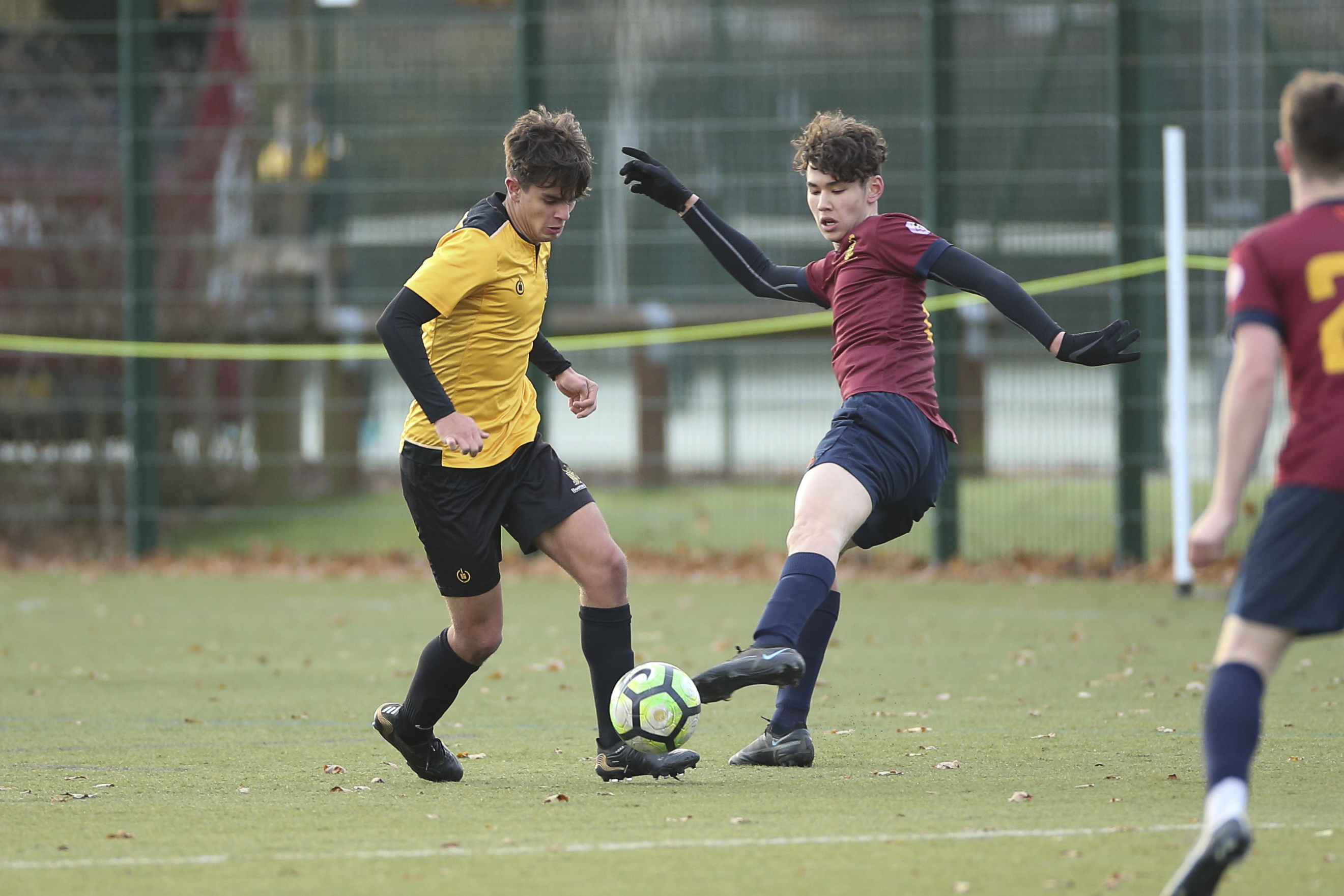
Since then, Mr Finnerty has worked in many roles, imparting his knowledge of the game – as a coach in Premier League clubs such as Fulham and Brentford, as well as coaching the Women’s First team at AFC Wimbledon. Currently, he develops young players at Hampton, and also works at the FA as a coach mentor. He constantly adapts his lessons and philosophies, ensuring they remain in tandem with the ever-evolving game. He recognises this as crucial, citing the changes France made to their youth development, which led to the emergence of their World Cup winning team.
Mr Finnerty is also helping the FA to update and streamline their approach to developing players, as they look to introduce a new programme in the 2026-27 season called ‘Future Fit’, which encourages small-sided games, with the hope of enhancing ball-playing ability from a young age.
This is also a key element of Hampton’s football philosophy’, especially in the younger years.

Given Mr Finnerty’s experience in coaching both junior and senior players, he compared the training of the two: “There are some similarities. There is still an element of player development because the good players have a desire to continually improve within the team framework. They challenge themselves. The best players want to be tested and often put themselves up against other good players at training so they can improve.”
Despite having jobs at many levels, this is one key denominator which Mr Finnerty has identified, as the best players are always looking to enhance and refine their game. It is this resilience and determination, while often overlooked by some, that Mr Finnerty believes are the most important characteristics in young footballers, stating that “attitude comes before ability.”
Both on the pitch and in training, the individual skills of a player are second to their reaction to a teammate losing the ball, their technique is only as impressive as their willingness to improve, looking at themselves before blaming external factors. This is a trait that can be carried through a player’s entire football career, as well as their life, as it underpins the constant need to adapt, as Mr Finnerty explains, “If you don’t do that you will become outdated, go backwards and eventually fail.”
This is one of the countless reasons football is loved by so many around the world, and is important for both cultures and countries, something that hasn’t changed for generations. It provides obvious health benefits which cannot be underestimated, alongside important social benefits, as it helps young people learn the importance of teamwork. It provides invaluable life lessons which can’t be much better taught than out on the pitch.
And thus, the best coaches are often discerned not solely by their results, but by their ability to develop their students as people as well as players.
“My advice to any young player is always be respectful, be willing to learn, and always try your very best to improve.”
Leave a Reply