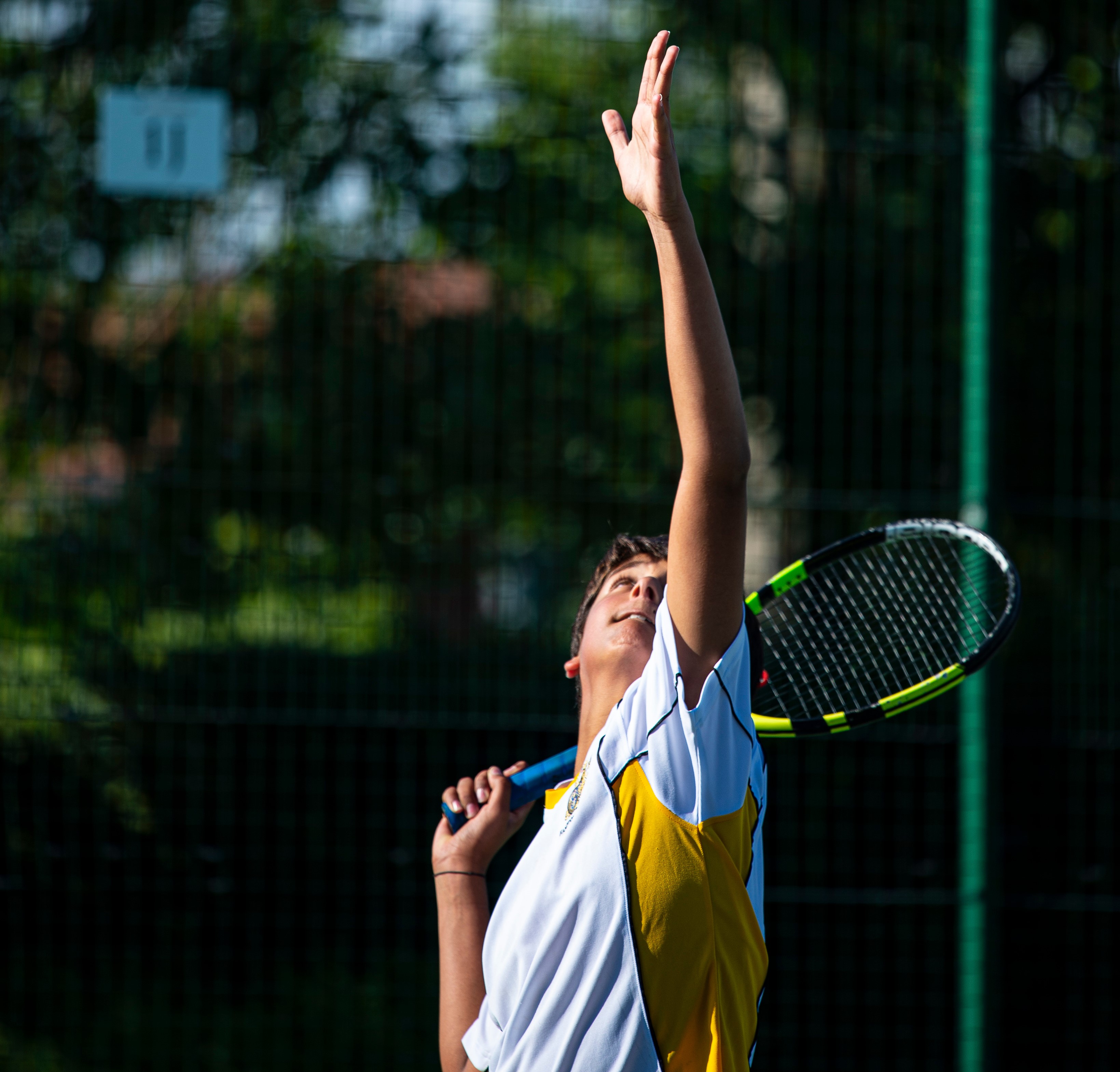
By Harry Morris
Many Hampton pupils will know Miss Todd (or Mademoiselle Todd if you’re in the French classroom) as a French teacher and Head of Tennis at Hampton. However, what you probably didn’t know was that she was a very talented and successful youth tennis player, and had many amazing highlights, such as her beating the former GB women’s tennis Number 1, Katie Boulter. As well as her successes, she also tells me about some of the lows she experienced in her tennis career, such as the injury that stopped her fulfilling her tennis dreams, her plans for tennis at Hampton and advice for young tennis players.
From a young age, Miss Todd’s tennis talent was obvious, and she entered the county setup at just seven years old. She also played county hockey and netball, but her passion for tennis crowned it outright as her favourite. Due to her love of the game, she was willing to train very hard and practise as much as she could. During her school years she would “train before school probably three or four mornings a week for an hour” and if she couldn’t play during her sport lessons at school, she would train for a couple of hours in the evening, so was “training two to three hours a day amongst my studies.” She found that when playing tennis, she could “very easily get into a flow state,” allowing her to play very fluently at her best and “get into the moment”.
This dedication brought success and new opportunities for her, as she started to play in many national, then international tournaments. She was able to travel around Europe with her mother, a fantastic experience for her, but one that naturally came with a few sacrifices. She took the big step of leaving school at 16 to focus full-time on her tennis, which her parents agreed to, although “they very wisely insisted that I did my A levels with a tutor.”
One of her biggest achievements in tennis was when she won the Junior ITF (Junior International Tennis Federation) Doubles competition at the age of 17. Miss Todd played against some brilliant players and was able to match them and sometimes even beat them. She faced British greats such as Katie Boulter from a young age, and remembers beating her a couple of times when she was younger.
She also remembers a “very tough match” in doubles against Harriet Dart (who ranked 70th in Women’s singles last year) when she was 17. She played in many high-profile tournaments, competing in the Road to Wimbledon Finals, which is a level just below the extremely high standard of Junior Wimbledon.
After all these fantastic moments and successes, she picked up a serious injury when she was 18, meaning suddenly she found out she could no longer play tennis at the high levels she wanted to. She described how this process was like “having a divorce, because it was a really huge part of my life and identity [sport and playing tennis] that I had to very quickly give up.” She was unable to recover from this injury – it was in her lower back; it wasn’t going to get better with rest and thus she couldn’t play tennis competitively again.
She had to suddenly pull away from her tennis dreams, but this did allow her to drop back into school for her A levels. While this ruined her hopes of achieving more things in tennis, she still believes all her tennis training and tournaments were worth it, as “tennis made me into who I am today in all aspects of my life”; even her injury taught her “self-discipline and resilience”. But she admits that sometimes she finds it hard that when she meets people in later life; they don’t know that tennis was a huge part of her identity and who she was.
Once she had come to terms with her injury and moved on from her tennis playing days, she tried out some different jobs, and while she enjoyed them, she wanted a career that would be “more purposeful and busy”, so she decided to go into teaching, joining Hampton as she could tell that it was a school that she would enjoy being part of.
Even though she devoted a large chunk of her childhood to tennis, she never thought that she could use tennis in her teaching career, yet now she really enjoys being Head of Tennis alongside French teacher. Tennis is different to other sports as there’s a real mix of year groups in the squads, with Third Years sometimes playing with Upper Sixth formers. As a coach, Miss Todd strives to be thoughtful, equally focusing on the mental side of the sport. “Tennis is such an individual sport” so it is important that you “build up mental resilience and mental strength on court”, and you can get ready for that in training.
Under her leadership, more boys are getting involved and “a record number of First Years are coming out to practise at lunch”, which is a huge positive for the tennis setup at Hampton. She has also introduced a tennis tour to Portugal, comprising of lots of age groups and giving the lucky players exposure to clay courts in the sun! The trip was a great success, and she would love to do it again. She also thinks that Hampton are one of the strongest schools in southwest London and have been performing very well in fixtures. She wants to build from these successes, and she now hopes to build “a real sense of camaraderie amongst the team tennis players”, as well as getting more and more pupils to start playing tennis.
Finally, she also has some advice which she would like to share to young tennis players at Hampton: “if you love the sport then step out on to a court as much as you can, whether that means finding a partner just to hit one-on-one, or taking a basket of balls and practicing your serve by yourself by putting some targets out” and to “ never miss an opportunity to be on a court”, so you can improve and develop your game to become as good as you can get. Finally, her advice for all Hamptonians is that “if you haven’t played tennis yet, they should give it a go as it’s an incredibly social sport and one that you can carry right through life.”
Leave a Reply